Unraid vs TrueNAS in 2026: Trade-offs & Capabilities
Two of the most popular NAS operating systems in the homelab and self-hosting community are Unraid and TrueNAS. While both can serve as powerful storage and application platforms, they take very different approaches in how they handle storage, virtualization, containers, and security.
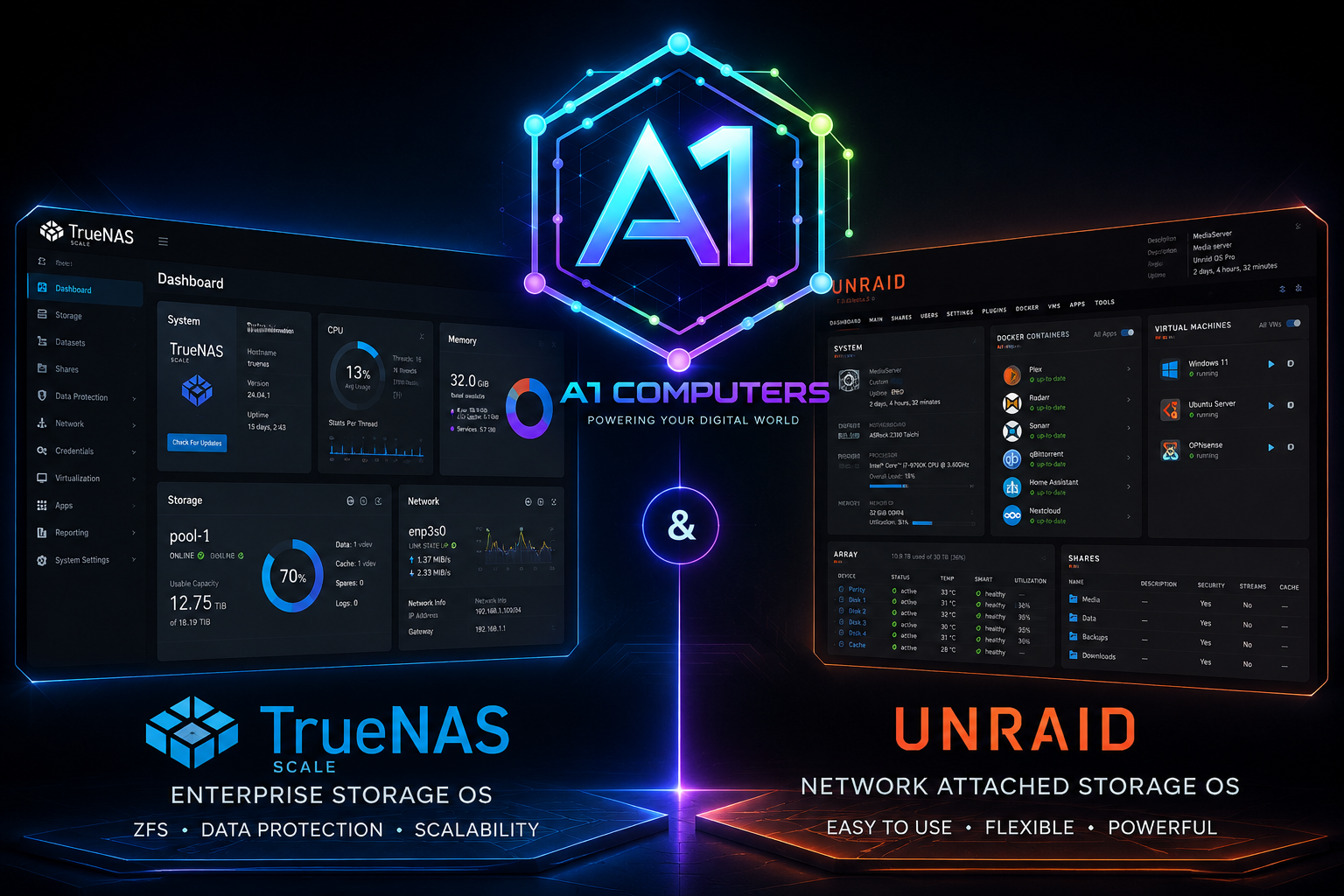
Visual Overview
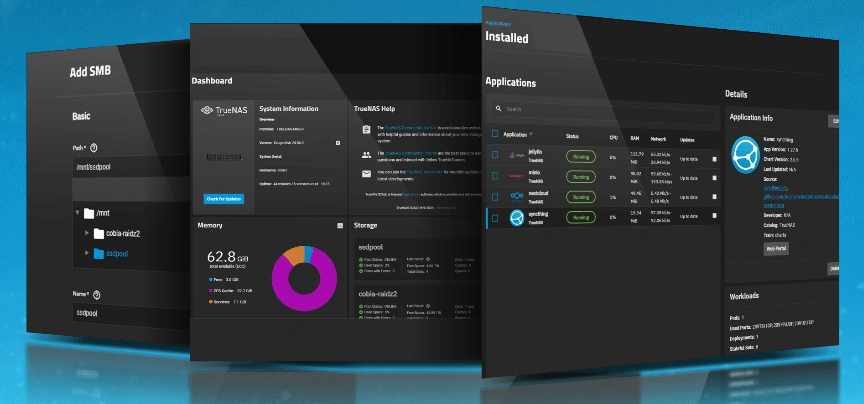
TrueNAS
Enterprise-focused with strong ZFS and data integrity features.
NAS Installation
Practical setup and configuration.
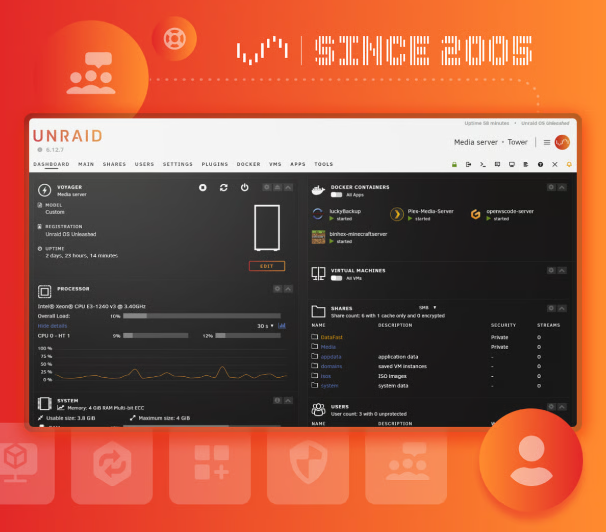
Unraid
Flexible storage with easy Docker and VM management.
Key Trade-offs & Capabilities
Data Integrity & ZFS
TrueNAS (especially TrueNAS Scale) uses ZFS by default, offering excellent data integrity, snapshots, and scrubbing. Unraid uses a parity-based system and does not use ZFS natively.
Drive Flexibility
Unraid excels here. You can mix drive sizes easily and expand storage without rebuilding the array. TrueNAS prefers uniform drives for best ZFS performance.
Containers & Apps
Unraid has a very user-friendly Docker experience with the Community Applications plugin. TrueNAS Scale uses Kubernetes (via TrueCharts or native apps) which is more powerful but steeper to learn.
Virtualization
Both support virtualization well. Unraid offers simple KVM-based VMs. TrueNAS Scale provides stronger integration with Kubernetes and better resource management for heavier workloads.
iSCSI & Block Storage
TrueNAS is significantly stronger here. It offers mature, high-performance iSCSI support. Unraid’s iSCSI capabilities are more limited and generally require more manual configuration.
Security & Stability
TrueNAS generally has a stronger security posture and more frequent updates focused on stability. Unraid is very capable but tends to prioritize features and ease of use over enterprise-grade security hardening.
Technical Deep Dive: Storage Architecture
ZFS (TrueNAS)
Uses a Copy-on-Write (CoW) transactional filesystem with end-to-end checksums. This provides strong protection against silent data corruption (bitrot). Features like snapshots, clones, and send/receive make backups and replication very powerful. However, ZFS performs best with uniform drive sizes and has higher RAM requirements for optimal operation.
Parity-Based Storage (Unraid)
Uses a traditional parity model similar to RAID 4/5 but allows mixed drive sizes. It offers good protection against single drive failure but does not have the same level of data integrity checking as ZFS. Bitrot protection requires enabling the built-in parity check or using third-party tools. Expansion is much more flexible.
Snapshots & Data Recovery
TrueNAS offers fast, space-efficient snapshots thanks to ZFS. Rolling back to a previous state is quick and reliable. Unraid’s snapshot capabilities are more limited unless you’re using the built-in snapshot feature or external tools like SnapRAID in combination.
Performance Considerations
TrueNAS generally delivers better random I/O performance with ZFS, especially with SSD caching (L2ARC/SLOG). Unraid can feel snappier for media streaming and general file access but may show limitations under heavy random workloads or when running many VMs/containers simultaneously.
When to Choose Which?
Choose TrueNAS if you want:
Maximum data integrity, strong ZFS features, excellent iSCSI performance, and a more enterprise-oriented platform. Ideal for serious storage servers and larger deployments.
Choose Unraid if you want:
Maximum drive flexibility, an easy and powerful Docker/VM experience, and a great platform for media servers, homelabs, and mixed-use workloads. Easier for beginners in many cases.
Official Links
Questions for the Community
Are you running Unraid or TrueNAS (or both)?
What made you choose one over the other?
Was it ZFS, drive flexibility, apps, or something else?
What has been your experience with virtualization and containers on your chosen platform?
Disclaimer
This content is for educational and informational purposes only. It is not technical advice. Both Unraid and TrueNAS are powerful platforms — choose based on your specific needs and technical comfort level.
No replies yet. Be the first to join the discussion!